
So the old saying goes.
And whereas this often holds true, it’s not always the case when it comes to heritage properties.
Well, not at first anyway. Not without a bit of work.
Take, for example, a holiday cottage we’re currently refurbishing in Cornwall.
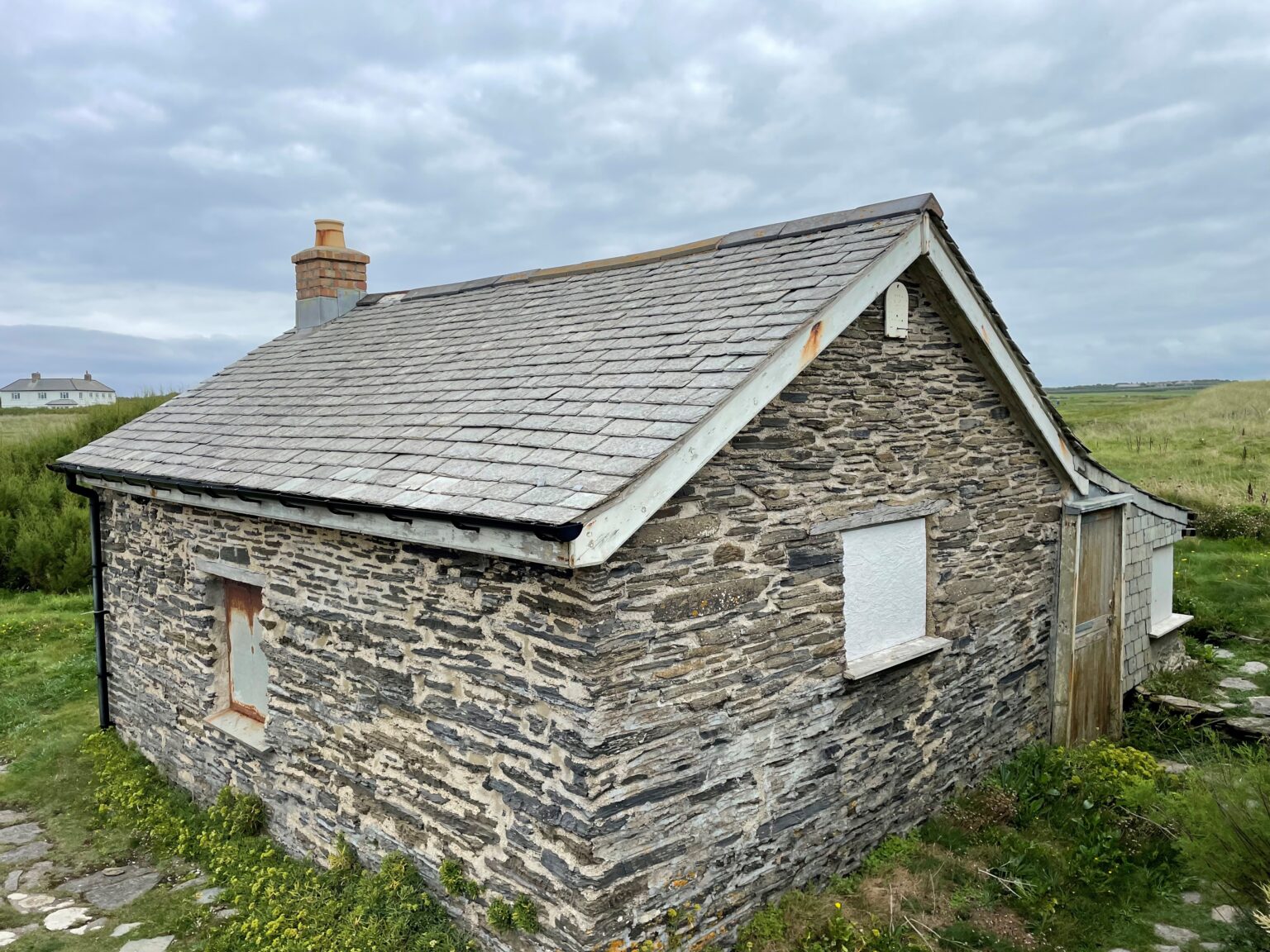
Owned by the National Trust, Tom Parsons’ Hut is a small, rectangular, single-storey stone dwelling which overlooks Booby’s Bay near St Merryn.
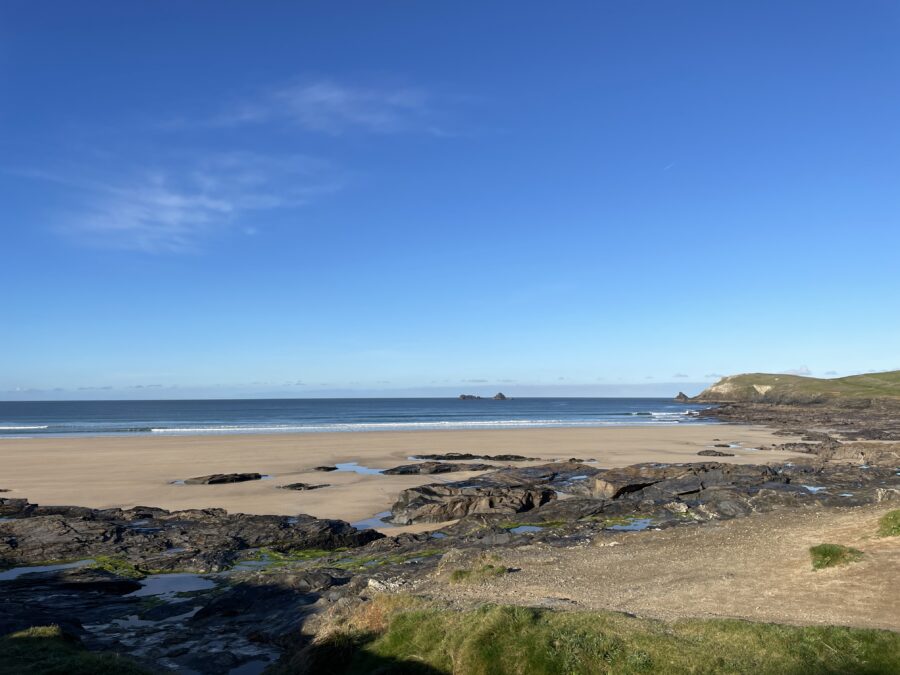
Left to the Trust on the condition it is used as residential or holiday accommodation, it was once the home of local farmer Tom Parsons who, legend has it, may also have been an infamous smuggler in the area.
According to census data, Tom occupied the property with his wife Elizabeth and their three children, William, James and Fanny, in 1841, but by the 1920s it had fallen into a dilapidated state.
The property was initially restored in the mid-1920s from a ‘ruinous condition’ and was gifted to the Trust in 1986 as a family holiday home.
But recognising the cottage’s value as a holiday let – rather than a facility for use by a single family – the National Trust contacted Trident Building Consultancy with a view to bringing it up to a modern standard, to enable holidaymakers to enjoy a comfortable and relaxing break in this breath taking setting.
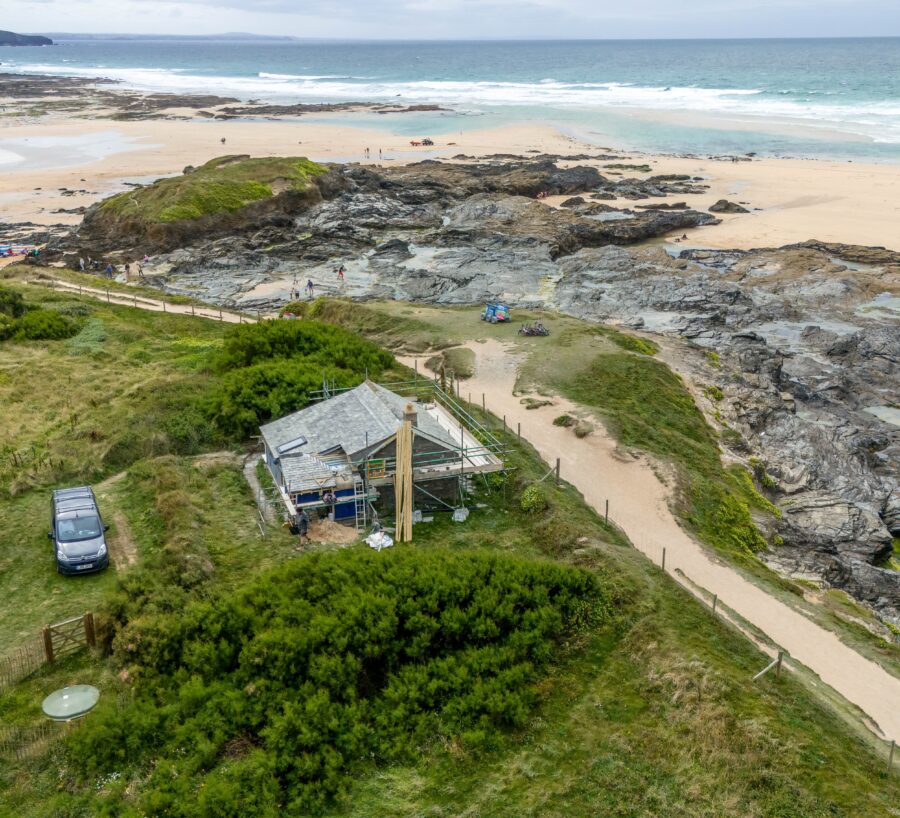
Simple enough, you might think. And in relation to the actual work needing to be carried out, it is fair to say this wasn’t our most challenging project.
The real challenges come from working on sites like this, where external factors can significantly impact on a scheme of work.
Tiny property
But before we take a look at all that, there is the small matter of the work we were appointed to carry out. Although on most other properties it would be fairly straightforward, this is certainly not the case for Tom Parsons’ Hut, and for one big reason – the property is tiny. Miniscule even.
There is not enough room to swing a kitten, let alone a full cat – how five people managed to live in it is anyone’s guess – and working in that size of property always poses challenges.
The Trust appointed us to bring the property up to Acorn rating 5. National Trust holiday cottages are rated from one to five on the Acorn scale, with five being their most luxurious.
Achieving this involved modest external works including minor repairs, redecorating the windows, repairs to the slate roof with areas failing due to nail sickness, and repairs to some external walls which were suffering with timber decay.
Internally, things were a different matter, though.
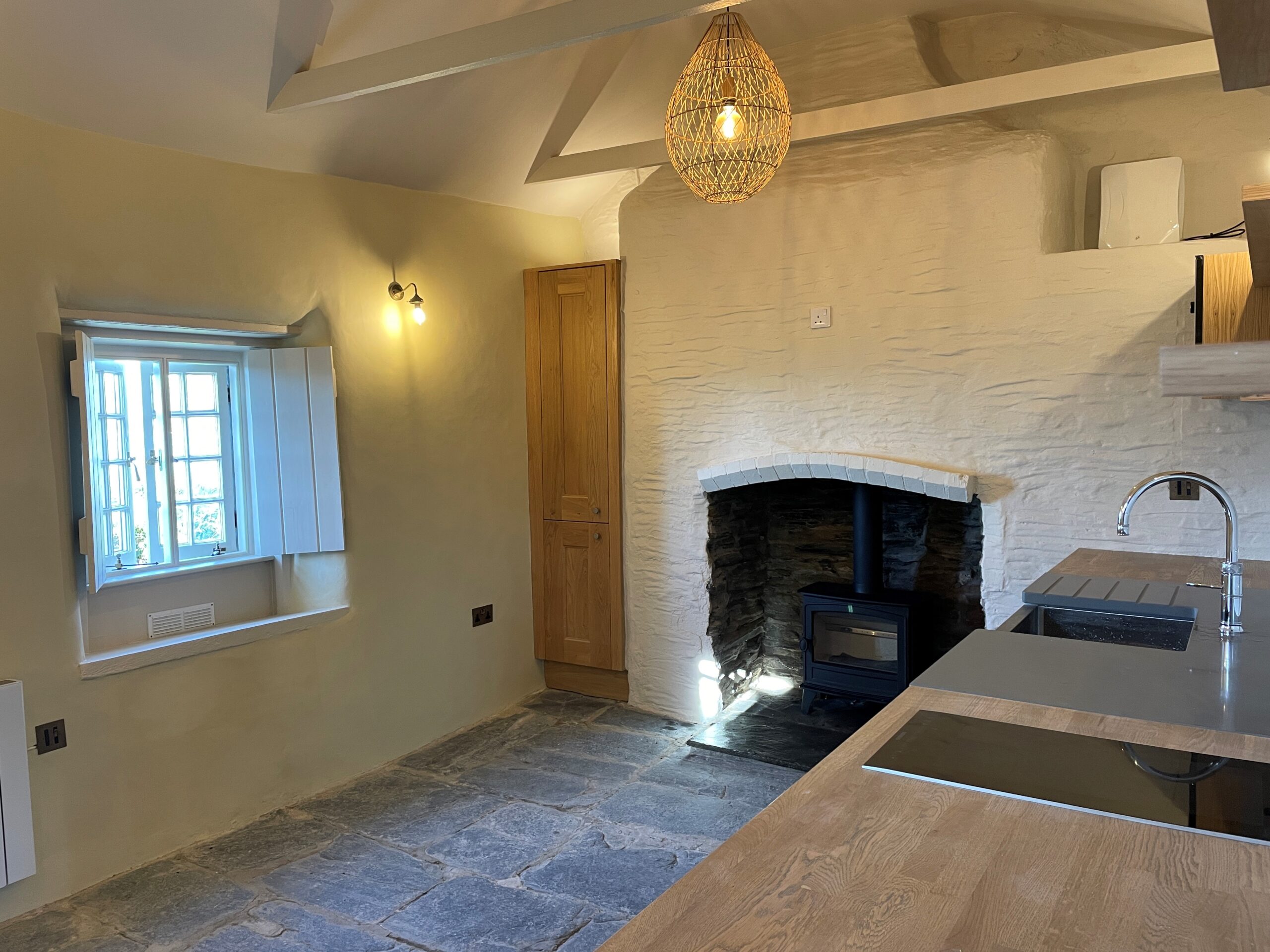
Our brief included fitting a modern, luxury kitchen into a very small space while still allowing for people to cook, eat, and move around.
The WC also needed modernising, which meant replacing the old units with new, again trying to realise enough space for people to be comfortable. This took a number of attempts until the final design was agreed, all parties were happy, and Building Regulations compliance could be achieved.
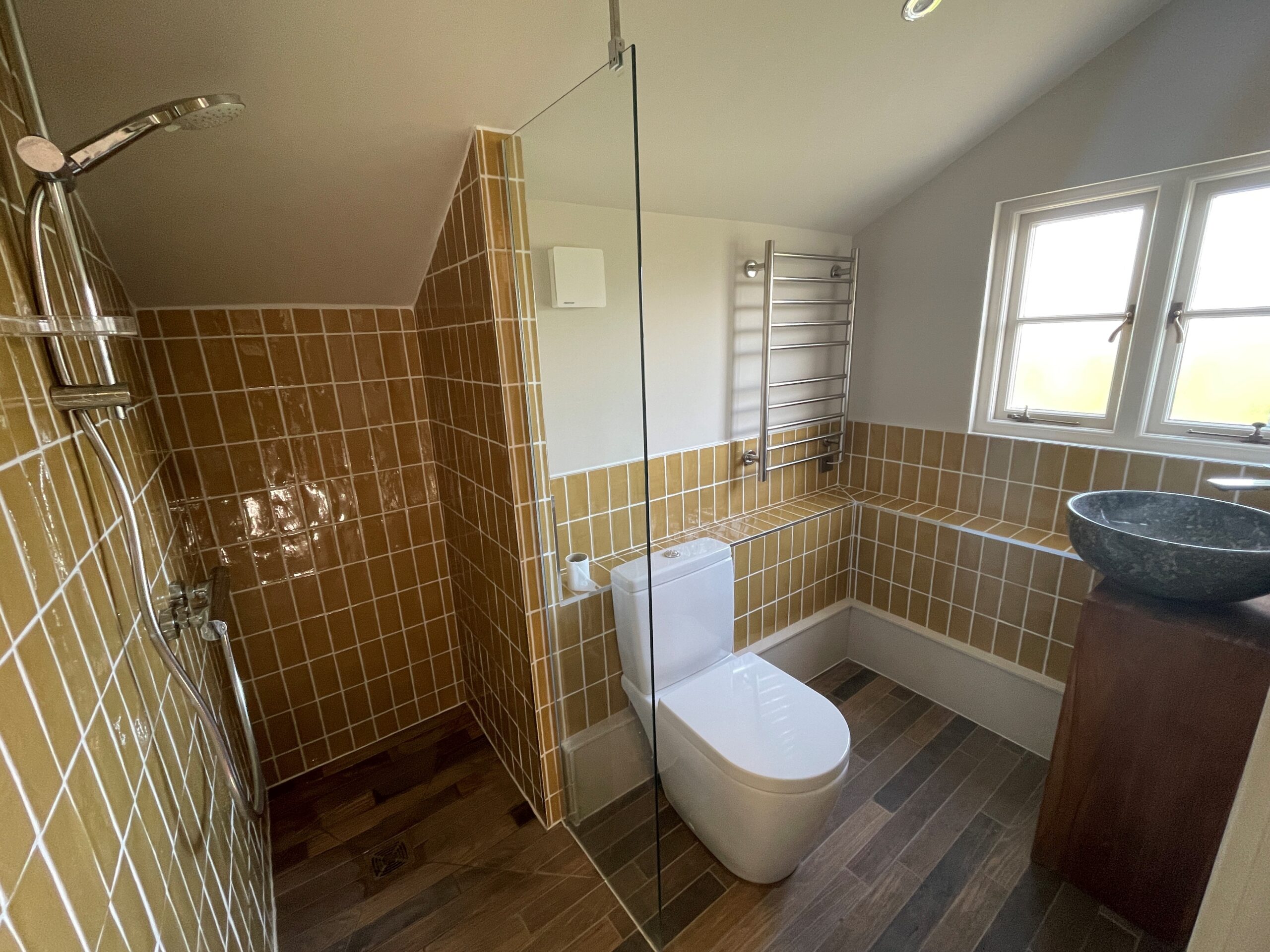
Oliver Davison, who is leading the project on behalf of Trident Building Consultancy, said a huge amount of attention was given over to ensuring none of the works would lead to any damage to the property.
He said: “A lot of work went into ensuring the building was preserved as sensitively as possible but with the modern upgrades needed to make it marketable and achieve Acorn 5 rating.
“For example, it’s not possible to use some modern products in the building as they would inhibit the breathability of the walls. This would result in trapped moisture and the condition of the stone walls deteriorating.
“This is particularly the case when you’ve got wind-driven sea water hitting the property.
“So, we had to install an insulated lime render system and utilise lime paints to allow the building to breathe whilst providing comfort for future guests.
“A lot of considerations like this were needed to ensure the modernised interior was protected.”
The spirit of old Tom?
But it wasn’t just inside the property that posed challenges to the project. In fact, some interesting local fauna also threatened to put stop to the work.
Not least when groundworks, carried out in the surrounding sandy landscape, unearthed a skeleton.
Yes, you read that correctly. A complete adult skeleton.
Evidence suggests it is unlikely to be the body of Tom as it pre-dates him. What is more likely is it is the final resting place of a drowned sailor as it was not uncommon for sailors to be buried where they washed up in Cornwall. Cornwall Council’s archaeology team took care of the body respectfully so we didn’t have to but the discovery certainly cast an air of mystery over the project.
But it’s not just the dead we had to contend with.
The property is situated on a Site of Special Scientific Interest (SSSI), in part because it is home to the UK’s rarest reptile – the sand lizard.
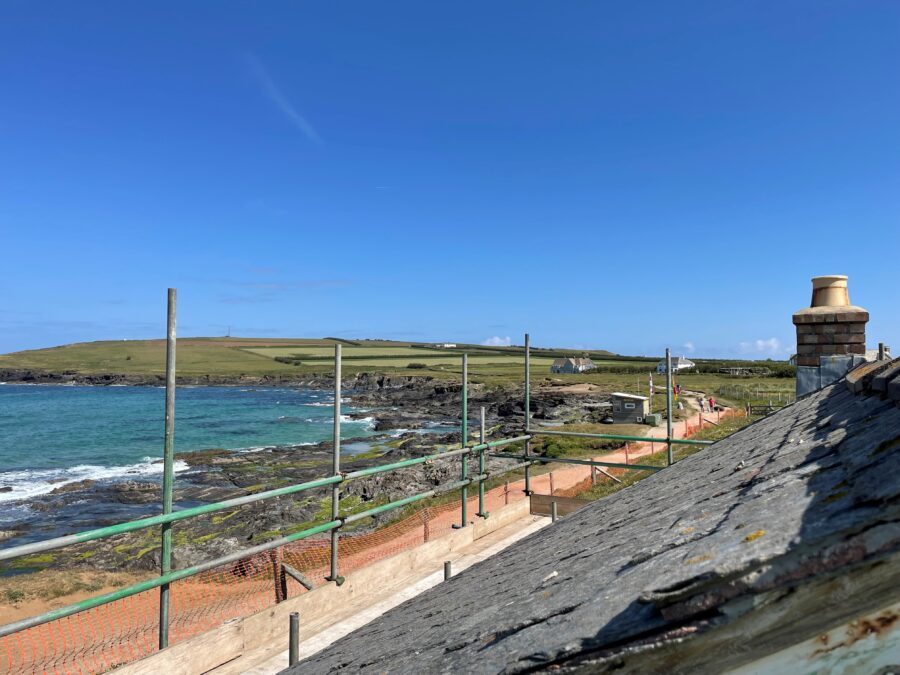
The sand lizard is found in just a few places in the UK and as a result, is consider a threatened species.
For this reason, an application was made for a European protected species licence to carry out the work, and an ecology team were on site regularly to ensure none of the construction activity impacted on the habitat of the lizards.
This involved significant restrictions on vehicle movements, which meant only a single vehicle was allowed to access the site.
Because of this, materials could not be delivered direct to site, but instead had to be dropped off at the closest main road and stored in an agricultural barn until needed, when they were brought down the single-track road to the cottage.
Although not hugely disruptive to the project, it certainly wasn’t the most efficient way to work.
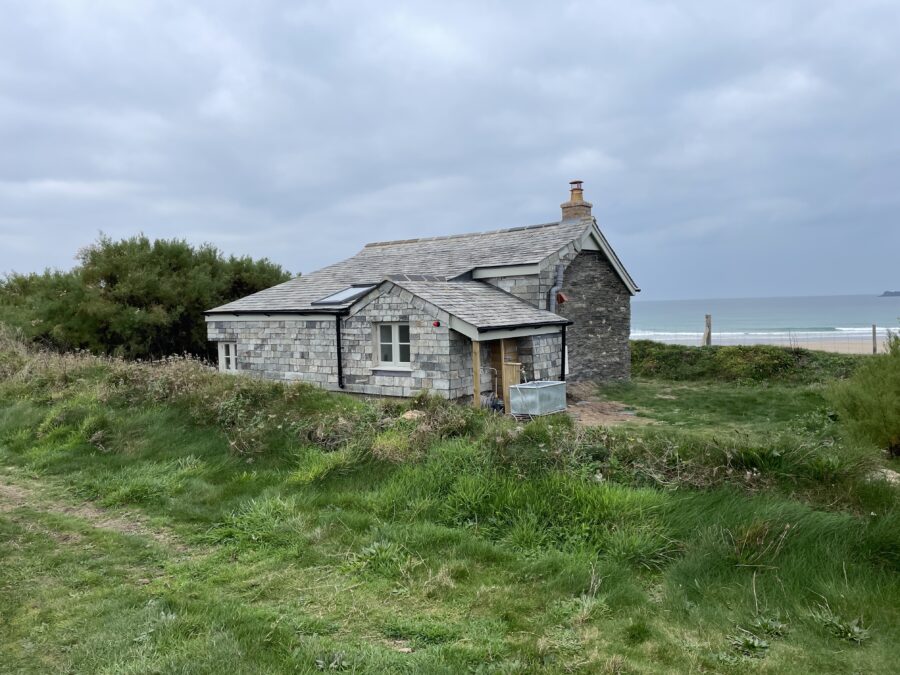
Other challenges included connecting the cottage to the drainage system by way of a sewage treatment plan recently installed by the National Trust, and working with the National Grid to ensure sufficient power provision to the property.
“It would have been easier to build a hotel from the ground up; something new cropped up every week,” Oli remarked, tongue-in-cheek.
“Joking aside, it’s a remarkable little building with lots of history, so it’s a pleasure to be able to work on projects like this and restore them so they have a future, not just a past.
“The story of Tom Parsons and his hut is a fascinating one, and was made all the more so by the discovery of the skeleton and working around the sand lizards to make sure their habitat is protected.
“It may have presented a series of challenges, but this is why we work with heritage properties – to overcome those challenges and give old buildings a new lease of life.
“It helps to keep our history alive and relevant to the times we’re living in now.”
If you would like to stay next to one of the country’s finest beaches in the country you can book Tom Parson’s Hut via the National Trust’s holiday cottage bookings website here: Tom Parsons’ Hut Cornwall | National Trust
Check out the press coverage this article received below: