
How Trident Building Consultancy Excels in Project Management
In today’s rapidly evolving construction landscape, the demand for innovative solutions in project management has never been higher. We have seen our fair share of office, white boxes, industrial units, and residential developments but what we really enjoy is getting our teeth stuck into those irregular, tight, and challenging spaces.
As urban spaces become more congested and land becomes scarcer, developers are increasingly faced with the challenge of providing better functionality, more Net Internal Area (NIA) and achieving higher sustainable targets which makes for projects to be developed within tight, irregular spaces with complex designs.
As a project management and building surveying firm, Trident Building Consultancy has carved out a niche in navigating the complexities of such challenging environments.
The Urban Conundrum: Building in Confined Spaces
Modern cities are characterised by their density, which often leads to construction projects that are not only spatially constrained but also fraught with regulatory hurdles, logistical challenges, and the need for sustainable practices.
With limited space available in modern cities and urban areas coupled with the drive for net zero carbon developments, and the added risk associated to construct costs, exploring opportunities for our clients to add value to their portfolio is becoming increasingly difficult. Simply adding mass is not always a feasible option, with retrofit of existing properties presenting more opportunities for our clients.

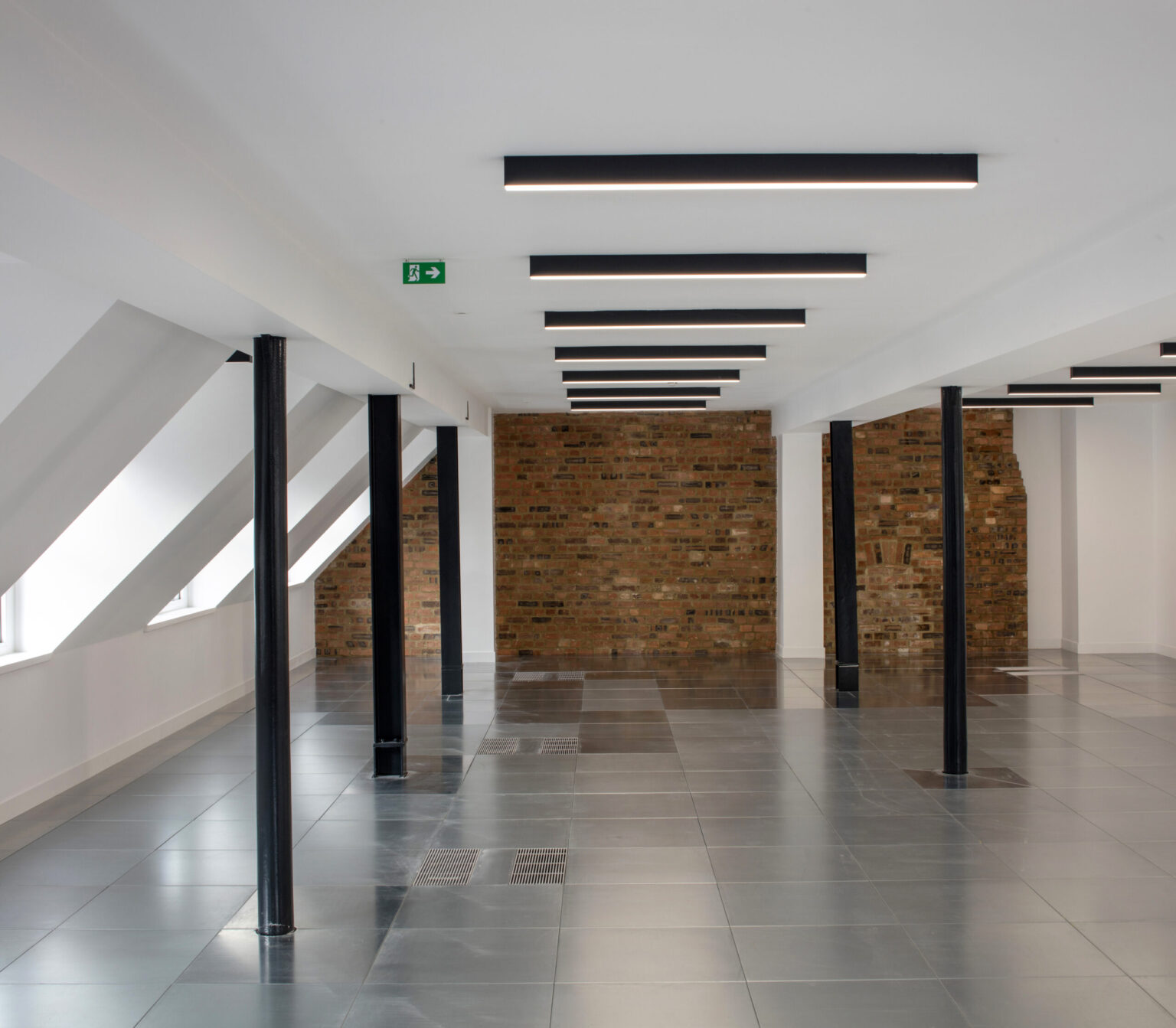
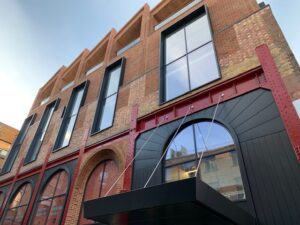
One such project is Devonshire Square, a retail and office building in the City of London, which Trident delivered.
David Juniper, PM on the project and a Director of Trident’s London office, discusses the intricacies and complexities of the project.
David said: “Devonshire Square is a typical period office building that did not meet the needs of the modern tenant. The existing structure restricted options for a retrofit solution that would tick all the boxes, such as a layout that would maximise letting opportunities and an efficient M&E solution that would meet the client’s ESG goals.
“Adding additional mass and reconfiguring the existing core would significantly impact net zero carbon targets. So, it became a balancing act – a push and pull between the letting market expectations and the clients ESG goals.”
David added that the ultimate decision was to demolish the existing core and frame behind the façade and extend upward by adding two new levels, retaining the existing structure wherever possible.
“This created a far more efficient space in terms of letting and the future energy operational use,” he said.
“But the challenges involved in doing this didn’t stop at the feasibility and design stage.
“There is no main road access to the building; the front of the building is pedestrianised with a passageway leading down to Bishopsgate, and to make things more complex, it is sandwiched between buildings that were occupied. Projects like this often pose a real challenge because of the level of risk and unknown quantities involved.”

Trident is increasingly seeing developments similar to Devonshire Square where the constraints within the boundary line continue to provide challenging developments.
Callum Rutherford, a Senior Associate Director in the London office, reflects on the complexities of the development of a private pathology laboratory on Whitfield Street.
He said: “We were appointed to deliver a complex 40,000 ft² pathology laboratory of which we had to maintain multiple live laboratories within the building whilst refurbishing was ongoing.
“The refurbishment included numerous structural alterations to adapt the building to what is now a state-of-the-art Histology Pathology, Rapid Response and Advanced Diagnostics Laboratory.
“We had to carefully detail a phasing programme to provide a temporary 5,000 ft² laboratory that needed to be relocated multiple times around the building in order for the patient services to continue whilst we continued to undertake the construction refurbishment.
“This not only required us to focus on the construction elements but also using our expertise in healthcare projects to assist with the relocation of laboratories and commissioning of the laboratory services for our client to continue providing seamless patient services and testing.”
The Trident Approach: Strategic Project Management
Trident has developed a comprehensive approach that focuses on three key pillars: meticulous planning, innovative solutions, and collaborative partnerships. Here’s how we tackle the unique challenges of tight and irregular projects:
1. Meticulous Planning: Anticipating Challenges Before They Arise
The first step in managing any project, especially those in constrained environments, is thorough planning. At Trident, we invest significant time in the pre-construction phase, conducting detailed site assessments and feasibility studies. By understanding the specific limitations of the space – be it structural constraints, access issues, or environmental regulations – we can devise a project plan that pre-emptively addresses potential challenges. This approach not only saves time and resources but also ensures that stakeholders are aligned from the onset.
2. Innovative Solutions: Thinking Outside the Box
When it comes to construction in tight spaces, conventional methods often fall short. Trident prides itself on fostering a culture of innovation. For instance, modular construction has become a game-changer in our approach. By prefabricating components off-site, we can reduce the time spent on-site and alleviate the constraints posed by limited access.
Additionally, our expertise in utilising technology, such as drones for site surveys and advanced project management software for real-time collaboration, allows us to optimise space utilisation and enhance project coordination.
3. Collaborative Partnerships: Building Bridges with Stakeholders
The complexity of tight projects often necessitates collaboration between multiple stakeholders including architects, engineers, local authorities, neighbouring properties and governing bodies. Trident excels at fostering these essential relationships, ensuring that all parties are on the same page throughout the project lifecycle.
Our project managers facilitate regular communication and engage stakeholders early in the planning process. This collaborative approach not only helps in identifying potential roadblocks but also allows us to tap into the collective expertise of our partners, resulting in more effective problem-solving.
Transforming a Challenging Urban Space
One of our recent projects exemplifies the Trident approach. Tasked with transforming a former ice factory in Belgravia to a modern office, restaurant and gym facility, the 200-year-old industrial unit provided its fair share of challenges.

David Juniper said: “The site housed an ice distribution factory during the 19th century, converting to many different uses over the subsequent years. A former electrical distribution centre also adjoined the site, with a network of below ground ducts and
tunnels distributing the electrical supply to the local amenities. The existing conditions made demolition and excavation works challenging, with a number of holes, crevices and tunnels identified that the initial scan investigations didn’t pick up.
“The District Line also runs under the site and the top of the tunnel is only 3m below the slab. This made excavating, formation of new foundations and running a network of new duct to the building a real challenge and required a lot of engagement with TFL in terms of protecting their infrastructure.”
David added having challenges is good thing because on every project you learn something new and bring in new specialists and you have to adapt.
“Plus, when complicated projects come to fruition, it is generally a source of pride,” he said.
“The Ice Factory had a huge number of challenges. But going back and seeing the building fully let, as the design intended makes you think what a great product we delivered.
“I don’t think we would have been able to do that if we didn’t specialise in these types of tricky, tight, and challenging projects. They’re what make us tick as Project Managers and what we want to continue doing – meeting the challenges head on and delivering an exceptional project for our clients.”
Trident Embracing the Challenge
In a world where space is at a premium, the ability to manage projects in tight and irregular environments is not just a skill; it is a vital necessity. Trident has established itself as a leader in this niche sector, demonstrating that with the right planning, innovative solutions, and collaborative partnerships, even the most challenging projects can be executed successfully.
As we continue to embrace the complexities of urban construction, Trident remains committed to pushing the boundaries of what is possible, ensuring that we not only meet our clients’ expectations but exceed them.
In the ever-tightening landscape of construction, we are here to carve out a path to success — one project at a time.
If you would like to get in touch with David or Callum, please email david.juniper@tridentbc.com or callum.rutherford@tridentbc.com .